Search This Blog

Monday, March 16, 2015

A Long Time ago in a Land Far Away...

Hello and welcome to part 1 of my fairy tale series!


If you missed my last post, you can view it here and get some context.


Today, I want to explore what makes fairy tales so enchanting. The fairy tales we know and love today have persisted for thousands of years in millions of iterations. But why is this? The stories in the recently published "Turnip Princess" certainly have not carried the same meaning for us as Cinderella or Snow White. Disney has had some part in this, but they're only about a century old.

To answer this, think about your favorite movie and why you like it. Not the one you saw last week or the latest summer blockbuster. The one you reach for when you're feeling down and know all of the lines by heart. Chances care, it carries some meaning personal to you. Does it cheer you up? Give you hope? Present a worldview or way of life that speaks of truth in your own life?

The same is true of fairy tales.


To start, let's look at the main elements of fairy tales.

  • A child starts out simply, but goes on to become a hero (protagonist)
  • Villain (Antagonist)
  • Magic saves the day
  • Happily ever after


At first glance, it doesn't seem like any of these elements could possibly be relevant to us. After all, magic doesn't exist and can anyone say we've yet found our happy ending? In truth, just like most heroes, fairy tales' apparent simplicity belies great wisdom. So much so that modern creators are taking these themes and creating their own fairy tales. Star Wars springs to mind. (A long time ago, in a galaxy far, far away...)


Through the Eyes of a Child


Children especially love fairy tales because they can relate to them.
Psychological theory tells us that young children experience animism, or the belief that everything is alive. As educators, I'm sure you've witnessed children talking to a favorite stuffed animal or being afraid of a scary mask. In fairy tales, then, talking animals come across as very natural and even friendly. They are a common motif as helpers and companions. In Grimm's Cinderella, birds help Cinderella complete her difficult tasks; in Hansel and Gretel, they are used as guides. Animals can also represent what's scary for children, such as the Wolf in Little Red Riding Hood and the Beast in Beauty and the Beast.


 Magic

As for magic, there's a saying that magic is simply what we don't yet understand 1. Young children certainly don't yet understand how everything works. In their world, plates of food suddenly appear when it's mealtime. A car that may as well be a magic coach transports them from place to place. As they play, they invent fantastic scenarios in their imaginations. It's also true that the fairy tales we're familiar with were told long before modern scientific marvels such as automobiles. Fairy tales, then, rely not on science, but on deep-seated beliefs of the region and magical constructs. Even Star Wars, created in the 70s, introduces the mystical concept of the Force, which defies scientific explanation. (The prequels don't count for the purposes of this article). Other modern fairy tales may include science fiction or something just beyond our grasp. It is that sense of wonder that children naturally possess that allows the hearer of the story to suspend disbelief and skepticism for a little while.

The Hero


Finally, the Hero. In his book, Bettelheim brings to the surface an idea I had never considered. In fairy tales, the hero is usually the youngest child or a simpleton, looked down on by everyone. Now think about the child: younger than everyone else in their world, looked down on by adults, and generally thought of by many as being ignorant of the ways of the world. They may have siblings who they feel treat them as cruelly as Cinderella's stepsisters or invoke jealousy as in Puss and Boots. As they play, then, is it any wonder that they often act out superhero stories and cast themselves as the hero?


So you see, fairy tales start where the children already are and form that initial connection, which is essential for learning.


Learning what? The answer is one that intrigued me so much, it inspired this entire series of blog posts. Unfortunately, it also takes a bit more time than we have right now. I'll simply say that the role of the villain in a child's life strikes closer to home than many of us would like.


So in the meantime, I'll leave you to ponder the question while I prepare part 2: An Evil Awakens.


Can you think of any modern fairy tales? Comment below!

Until then, happy teaching!

--Amy 

*all images from clker.com

1. "That's one form of magic, of course." "What, just knowing things?" "Knowing things that other people don't know." --Equal Rites, Terry Pratchett

Continue to parts two and three

Saturday, March 7, 2015

The Importance of Fairy Tales


There was a teacher who worked very hard for her students. She toiled away, but felt like she was making little difference. One day, she thought, "I wish I could enhance my students' lives a little more. How else can I teach them important skills like independence and hard work and hope for the future?"  Suddenly, a magical prince named Bettelheim suddenly appeared. "Take these words of wisdom," he said, "and your students will prosper."  He handed the teacher a book and as she studied the magical tome, her world lit up and she knew that the answer had been in front of her all along:

Fairy tales.

There's no doubt that fairy tales still have a hold on us as a modern society. "Into the Woods" saw new popularity as a movie; "Once Upon a Time" and "Grimm" are successful TV shows, and Disney is already planning a live-action Beauty and the Beast as a follow-up to Cinderella.

What's interesting to ask is, "Why?" Why have these fairy tales endured for hundreds or thousands of years?

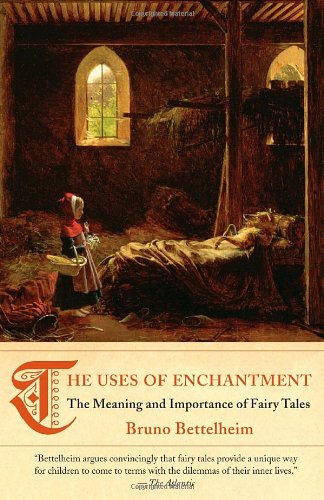
Recently, I read a book called "The Uses of Enchantment" by Bruno Bettelheim. He was a child psychologist in the 1970s, during a time when the world in general was thinking about education. Piaget and Erikson were both doing important research and changing the landscape of early childhood education to be what we know it today.


In the book, Bettelheim theorizes that fairy tales have persisted because they contain deep psychological truths that we can all relate to. Not only that, but they can become guides for us in solving our own problems.


I'm about to start a 3-part series about some of these theories; mainly, how we can use fairy tales and other literature to guide our children into finding their own path through the woods and becoming independent and thoughtful adults.

So please, take my hand, and follow me into a land far far away and a long time ago.

Comment with your favorite fairy tale below!

Continue to parts one, two, and three.

Thursday, January 22, 2015

5-month anniversary!

Guess what, everyone? It's my 5-month anniversary! That's right; I haven't posted for 5 straight months! Thank you, thank you; you're too kind.


I've had a lot of changes the past 5 months. I switched jobs twice! That's got to be a record. I tried Head Start, but it didn't agree with me. For those of you in Head Start programs and surviving, I give you my undying respect. The amount of paperwork and bureaucracy involved every day heaped on top of teaching is an enormous task.

So, now I'm teaching one-year-olds. I really miss my integrated class, but I love the environment I'm in now. I might see if I can take some classes to get a bachelor's in special education, but my husband just applied for a PhD program at a few schools. But you never know. So far, my life has been full of surprises, but they've helped me figure out what it is that I want to do with my life and what kind of person I actually am. For instance, I'm really creative but I'm terrible at communicating with my co-teacher (I'm getting better, I think!).

I also love my network at NAEYC. If you joined just to have it on your resume or get that requirement fulfilled, I encourage you to think about joining. There are lots of resources both on the site and in your local chapter. For example, I talked with one lady last month about being an assessor, something I didn't even realize existed. They've provided lots of encouragement and professional development for me as a teacher and I can't wait to start a new year with them.

If you're reading this at all, thank you. I'd like to let you know that I do plan on starting updates again, this time more focused on toddler activities than preschool. (Obviously, since I don't teach preschool any more.) Hopefully if you do teach preschoolers, you'll find some activities that can be adapted up. You won't find any lessons on TPT or TeachersNotebook since the school where I work uses its own format and those sites don't promote learning that early. Yet. I do want to continue tweaking the lessons and adding any I may not have up yet, so be watching for those.

Thanks for reading if you are and listening to my ramblings and expect an update soon! (Definitely before another month is up).

-Amy

Friday, August 22, 2014

5 Ideas You Can Use to Start your Schoolyear Off Right

Hello again!


Are you ready?

They're coming...sooner than you think...soon, your classroom will be full...of...children!

I hope you're having lots of success getting everything ready for the new children in your class. Maybe some are moving up from a younger class; maybe they're brand-new.  It's always a nervous time for teachers as we prepare lessons and materials, wondering what new challenges the new class will bring.

Fortunately for you, this blog isn't called "Pursuing Fear;" it's called "Pursuing Wonder."

 Do you remember your first year as a teacher? Or maybe this is your first year. There's a lot of uncertainty as you wonder what the staff will be like, how you'll get along with your directors and work under them, what to expect from the kids.

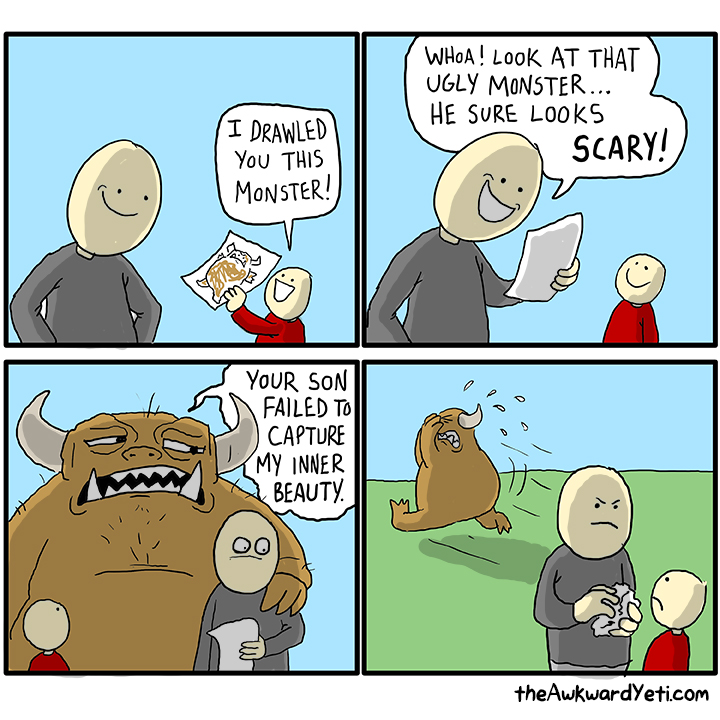
All this can feel like a big, scary monster and is especially true for the kids.

I have a monster of my own this year: a new job! Remember when I said that if you don't like your job, you should be grateful that you have one? Don't be afraid to look for other opportunities, too!

But have you noticed something about monster movies lately? In the past few years, there's been a glut of movies
featuring "nice" monsters: Warm Bodies, Twilight, Life After Beth. Monsters don't scare us as any more.
Even children's books have plenty of monsters that aren't scary.


So this year, banish your monsters and help your kids banish theirs with these 5 simple ideas:

1. Tweak your first lesson plan


     It can be tempting to wing it the first week; after all, you've taught the same thing year after year. But even if you have a lesson from previous years, try tweaking it. There are lots more ideas out there than when you created it.
     My first lesson plan, available soon, is strictly about rules. We're spending one day on each rule, with 2 days on Helping Hands.
     I have lots of monster books lined up to help me: The Love Monster, Leonardo the Terrible Monster, and Go Away Big Green Monster.
     There's also a fantastic resource on TeachersPayTeachers (not mine) about teaching Monster Manners. At the end, there's a mini-book about listening that I've already used with great success with the younger children transitioning into our classroom.

3. Revitalize your Mat chart

      So now you've got the perfect room arrangement. The problem with this is, that means moving the mat placement. Again. And re-drawing the mat chart. Again.

This year, I decided to use magnets.


         I used roomarranger.com to create all of the objects in the classroom; then, I saved a screenshot and printed it out on magnet paper. I laminated the whole thing and cut it up. Now, whenever I rearrange or move a child, I jut move the magnet!

         It's not a perfect system; when I test-drove it with the assistants, they were a little confused about where to put the mats at first. But with some tweaking, I think it will work.

3. Rearrange to create a new classroom

         I don't know about you, but I love rearranging my room. I do it at least once a year so that it feels fresh. Think about it from the perspective of your students: do you leave the same toys and props in the centers throughout the year? The same pictures up on the walls no matter what the theme? Of course not! Students need variety to feel engaged and the adult brain is no different.  
         You can read more about it here, but the fact is that changing our environment helps keep us creative and motivated.

I recently revamped our quiet center using a fantastic find: a giant cardboard box! 


4. Bulletin boards

         I discovered something great to do with bulletin boards: section them off.
As you can see in the picture, it breaks up big boards and organizes needed information into something bright and uncluttered. That's my visual schedule there at the bottom, using pictures of the classroom and attached with velcro. 


5. Desk

         It finally happened: my desk has nothing on it! I moved all of my resources out of sight to a file cabinet and kept out only the day-to-day forms. My library books and "To File" folder are nearby on a shelf.
(By the way, my "To File" folder is fantastic for me, a natural piler. I toss papers in it, then set aside one day a week to file everything in it.)
It feels good, but it looks so lonely now.

Need more easy tips to clean your space? Try this Lifehacker article:10 Simple Ways to Make Your Office Look Clean

Bonus Tip! 

         Initial conferences are a wonderful way to start the school year. Even if your school doesn't require home visits, make it a point. 
         While you're at it, give them your info on a laminated business card. I simply used a free Avery template, put my contact info on it, and printed it on bright paper. A magnet on the back makes sure it doesn't get lost. 
Questions sheet, calendar, and contact info


What are your best tips for starting out the schoolyear right? What do you absolutely need to do before you feel that you're ready? Share in the comments below!

Friday, August 1, 2014

Happy "Admit You're Happy" month!

Hello, all!

I hope you're having a great summer so far!  Are you planning for the next school year? Wondering what your kids will be like? Stressing about your boss? Well, in the immortal words of Douglas Adams:


You'll get there!

***************************
Today I found out that August is "Admit You're Happy Month." This seems like an odd concept at first. "How do you even know I am happy?"  My theory (and the purpose of this blog) is that there's always something to be happy about. Don't like your job? At least you have one in today's tough economy. Don't like your boss? Just be the best you can be. Do you have a home? Food on the table, however meager? There's always something to be happy about. 

Just remember as this school year starts: you're not alone. 

 A great resource I've found for getting myself motivated this year is this infographic from An Ethical Island:


When you follow that link, then you'll find that each area is clickable and takes you to a different resource about that topic. It can really help sometimes to re-think why you want to be a teacher and consider what else might be out there.

You can find more inspiration on my Pinterest board here: http://www.pinterest.com/tptkidatheart/teaching-philosophy/

Sometimes it can help to share our accomplishments with others and be lifted up by others. In the comments, we'd love to know: what keeps you motivated? What are you happy about this year? 

Happy teaching!

--Amy Latta, KidatHeart


Friday, July 18, 2014

Congress Has a Bucket, Too

As a teacher, you face many issues: conflicting regulations, Common Core, low pay. You may be wondering if there's anything you can do about it. I'm here to remind you that everyone has a voice!

Have you ever read the book How Full is Your Bucket to your kids? If not, you should. It's a wonderful book about how compliments and kind actions fill someone's happiness bucket throughout the day. One kindness may not seem like much, but eventually they add up.  You can probably see where I'm going with this.

Congress has several buckets that need to be filled. This means you, personally, can do one of two things: (1) you can sit in the back and complain, letting those with opposing views fill that bucket instead. Or (2) you can stand up for what you know your children need.

It doesn't have to be anything big. Start small. Talk to your team about the change you'd like to see. Write letters and let you kids draw pictures. Make a phone call.

And for all the doubters I know are still reading, here's proof that it works:

NC House Votes to Replace Common Core

"As a man changes his own nature, so does the attitude of the world change towards him. … We need not wait to see what others do.” Ghandi

Happy teaching!

--Amy Latta

Sunday, July 13, 2014

Potato Salad and Risk

Hello, all!

I hope you're having a great summer so far. My organization has come to a grinding halt; it seems there's always an emergency in the classroom these days. You know how it goes. We lost a few students to kindergarten, so we'll have lower numbers next week and hopefully I'll have some time then.

How many of you have heard of Danger and his potato salad?

It's the story of one man and his quest to crowdfund a $10 potato salad. Kickstarter, you see, recently changed their terms. They don't moderate projects anymore, instead opting to allow any project within reason. As a result, someone decided to Kickstart potato salad. He's not a chef; he's simply asking for $10 to make some potato salad. As a result of taking this risk, he has raised over $40,000.
Wikipedia

Here's a link to an article: http://kotaku.com/potato-salad-meets-kickstarter-goal-200-times-over-1600683951
and here's the link to the actual Kickstarter: https://www.kickstarter.com/projects/324283889/potato-salad

This got me thinking about risk. In the classroom, we teach our students risk all the time simply by challenging them in their natural play. "Can you build that tower higher?" "What happens if you do this?" We provide risk in a controlled environment because we know it's good for their development and self-confidence. If they fail, they try again, developing perseverance and self-confidence.


Children aren't the only ones who benefit from risk-taking, either. In adults, it can mean a new career, a new life partner, or simply reaping the rewards of an investment. When we take risks, our brain actually releases dopamine that gives us a sense of happiness. Taking risks actually makes us happier!

Now let me ask you: when was the last time you took a risk? When you built that tower up as high as it could go, even when it seemed like it couldn't hold another piece? Think about when that was, whether it was recent or long ago. What was the result of it?  Share your reflections in the comments below.

Happy Teaching!

--Amy